
Download my history of the calculating instruments in pdf (English)
Intro: preservation and progress
Modern world was designed with slide rule and mechanical calculator.
Still the youth ignore these instruments that anticipated our technology. I believe it's pointless to teach math without explaining how calculations were performed in the past.
With my free e-book "Was There Life Before Computer?" the teachers can effortlessly demonstrate the outdated computing systems.
To maintain the legacy of the slide rule, pascaline, and mechanical calculator, I arrange international lectures and exhibitions where the historical devices can be experienced by the audience.
I had also included displays on the history of communications and navigation prior to GPS.
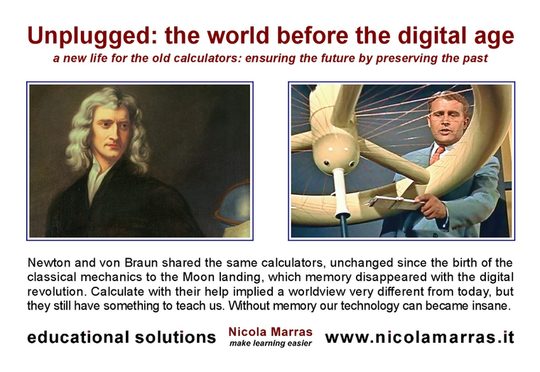
Short history of engineering before computers
Boring exhibits leave no trace
The exhibitions took place in London, Berlin, San Francisco, Slubice, Trento etc, and from 2007 until 2018 at The Cagliari Festival Scienza.

Presentation of the exhibition on communications (Italian)

Presentation of the exhibition on pre-GPS navigation (Italian)
Milestones in Analog & Digital Computing
Ancient calculating devices can be classified into two types: analog slide rules, which handle all scientific computations apart from addition and subtraction, and digital mechanical calculators, able to execute just the four operation
The modern computer exists due to these historical and seemingly essential instruments.
The slide rule, invented in 1632, contributed to the creation of everything from James Cook's flagship to the aircraft carrier Forrestal.
Mechanical calculators, created in 1645, were unable to handle complex computations and were mainly used for accounting tasks

The history of mechanical calculator and slide rule
Review of my history of calculation on Hackaday


Earth, ca 1819: the inventor Joshua Routledge and his slide rule


Moon, 1969: the astronaut Buzz Aldrin and his slide rule
It was difficult to imagine a world lacking them, yet in 1972, the arrival of the first modern calculator led to the rapid disappearance of slide rules and mechanical calculators. Leibniz's long-held aspiration materialized:
"It is unworthy of excellent men to lose hours like
slaves in the labor of calculation which could be
relegated to anyone else if machines were used"
No invention has ever had such a swift influence. The automobile required more than twenty years to gain acceptance but Electronics swiftly defeated the competitors. A revolutionary change.
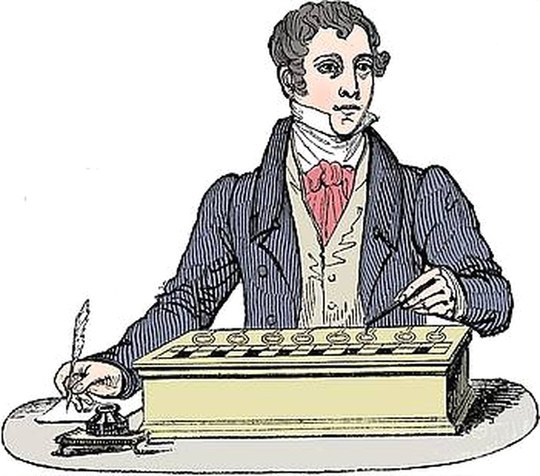

Mechanical calculator: very similar the models of 1645 and 1965
However, the transition was not painless because the slide rules were used in every field. Individuals were skeptical of the new electronic and factories continued to include the traditional instrument on the rear of the modern calculators.


Faber TR3 calculator with a sliderule on the back, 1975
By this time, though, the emerging technologies demanded greater computing power, leading Sharp to introduce the first mini computer: the PC era was born.

Sharp PC 1500 pocket programmable computer with printer, 1982
Was there life before computer? educational project has
represented Italy at the Science on Stage Europe Festival 2013
Old Calculators & Democracy
Nowadays people punch numbers into a keyboard and expect the calculator to provide the correct answer. The Art of Numeracy is no longer practiced and the world before computers almost forgotten.
Mathematics is currently learned without knowledge of its history, a false start.
With a calculator, modified to give incorrect results, I demonstrate how easy a student can make errors withoute notice.

Is the operation shown accurate? Check if the result is correct
Electronic should not be unconditionally trusted, we must comprehend and evaluate our actions. Software might contain bugs and the results need to be carefully analyzed. Previously, with the traditional calculating devices, the operators remained conscious of their actions and routinely verified the outcomes.
Nowadays, numerous individuals believe, "I don't have to verify, the computer understands better than I do". Unfortunately, the belief that "if an expert says it, it has to be true" is the foundation of the Authority Principle, resulting in psychological enslavement.
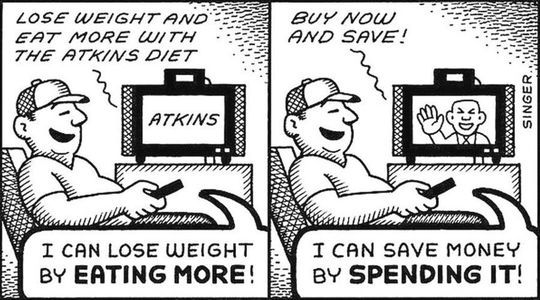
We'll believe anythings (if it lets us be lazy ...) @ Andy Singer
Promoting the traditional calculating methods as a mean of democracy might seems overstated, but it is impossible to live as a free citizen if we are unaware of our actions or reclutant to discuss them.
It's no coincidence that democracy originated in the same nation where mathematics and geometry emerged: unthinking use of the computer can result in pressing buttons mindlessly.
Scientific thinking and independence of ideas are not a natural product of intelligence, they must be cultivated steadily. A simple lesson about traditional calculation may help. A rational mind produces better decisions, better citizens and a better world.

This educational project has represented Italy at the
Science on Stage Europe Festival 2015
Didactics: teach, inspire, delight
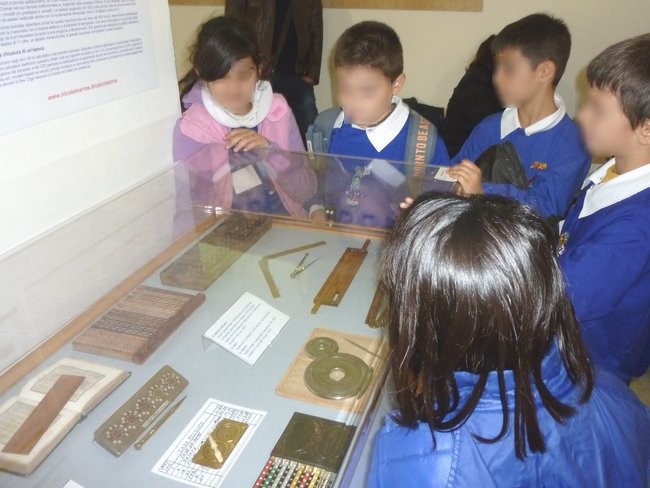
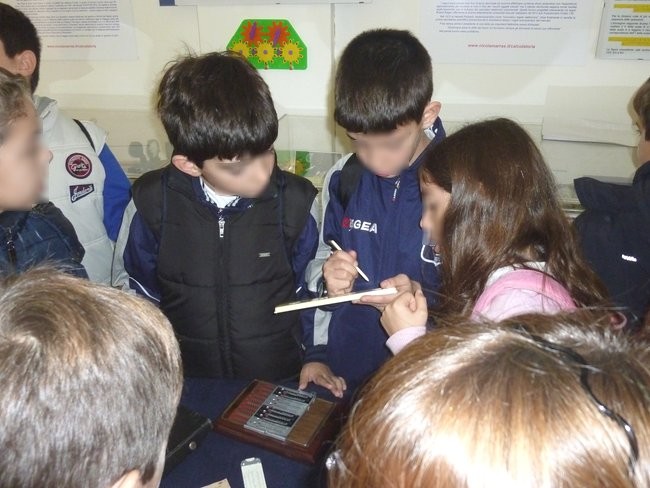
Even the little ones take an active interest:
pascalines and slide rule are not yet forgotten

Best staff = best show!

Download the templates of: E6B, slide rule, nomograms, abaques
Upcoming Lectures


About Me






We, the collectors
The power of objects regulates our lives in this faltering era, they become the consolation capable of absorbing all our anxieties about time and death: some thoughts on owning and collecting.

The collectors and the power of objects: possessed by possessions?
IM 2016
Nicola Marras Manfredi and Wolfgang Irler coordinated the 22nd Oughtred Society International Meeting at the MUSE Science Museum in Trento, Italy, from September 16 to 18, 2016
The theme takes its inspiration from comparing extinct species to the lost technology of mechanical calculators, worthy to be collected, analyzed, and used to explain its evolution.
Consequently, the actual collector may be considered as having equal rights to a paleontologist who digs for fossil remains, rummaging in forgotten cellars and flea-markets. What someone had thrown away became the collector's treasure.
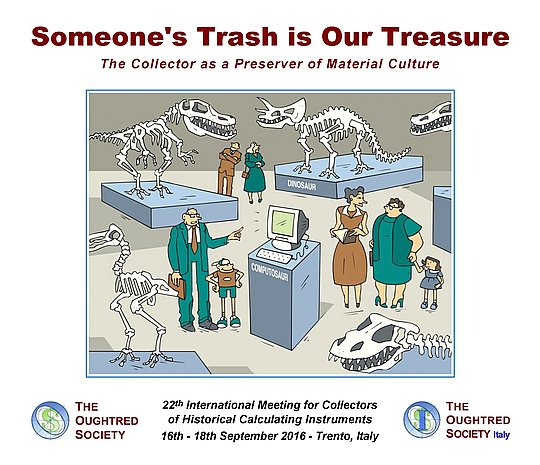
Download the congress proceedings or visit the dedicated page
Essential Library
For those who want to approach the world of analogue calculations, there is nothing better to read than Collecting Slide Rules and
All About Slide Rules, both free by the Oughtred Society.
At the International Slide Rule Museum we find a library, where numerous texts and instructions can be downloaded for free.
An excellent slide rule seminar is also available at the ISRM.


Links


David`s Calculating Sticks Nathan Zeldes Rod`s Lovett Slide Rules